
Comparing automobile insurance policies involves examining a set of standardized features and variations across multiple offerings to determine which combination of coverages, limits, and terms aligns with an individual’s needs. The concept centers on identifying and understanding the specific components that differentiate one policy from another — for example, the presence or absence of collision and comprehensive coverages, how deductibles are structured, the scope of liability protections, and the duration and renewal terms that apply. A systematic comparison clarifies trade-offs between premium cost and coverage scope without assuming a single correct choice for every situation.
Effective comparison relies on consistent inputs and a focus on measurable policy elements. When evaluating several policies, it can help to use the same vehicle data, driver history, and desired limit levels so that variations reflect policy design rather than inconsistent assumptions. Comparing also involves reviewing optional endorsements, exclusions, and how claims are handled. Careful reading of policy declarations and terms often reveals differences in how coverage applies in specific scenarios, such as rental reimbursement, roadside assistance, or coverage territories.

A feature matrix may often be the first practical tool used in comparisons because it makes visible the primary coverage elements and associated numerical values. A matrix typically lists coverages, such as bodily injury per person, bodily injury per accident, property damage, collision, comprehensive, and uninsured motorist protections, alongside deductible choices and premium estimates. When structured to include notes on common exclusions and endorsement availability, the matrix can also highlight where policy wording diverges. This approach helps to separate pricing differences caused by insurer underwriting from differences rooted in coverage design.
Sample policy forms provide insights that numerical summaries may miss. Actual policy language can define terms such as “accident,” “use,” or “family member” in ways that affect eligibility for coverage. Reviewing excerpts that show exclusions and conditions — for instance, how a policy treats aftermarket modifications, rental use, or business use of a vehicle — can reveal practical limitations. Where available, comparing the section that describes how claims are settled and the rights of insurers and insureds can clarify how a theoretically covered loss would be handled in practice.
Collecting uniform quotes is often necessary to align price comparisons with coverage differences. Asking for quotes with the same deductible, limits, and optional features allows an apples-to-apples premium comparison. It may also be useful to document the specific discounts applied and underwriting assumptions cited by each insurer, since these factors can change the effective cost. Keep in mind that quoted premiums may change once an insurer completes a formal application and verification process, so recorded quotes should be treated as indicative rather than final.
Beyond the headline coverages and premiums, attention to endorsements and service features can matter in real-world use. Optional benefits such as rental reimbursement, roadside assistance, or gap coverage vary in availability and terms; some are included by default, others require an endorsement. Similarly, differences in claim handling practices, repair network arrangements, and whether an insurer offers OEM-part repairs or aftermarket parts can influence outcomes. These operational aspects often do not significantly change premium but can affect satisfaction and recovery after a loss.
In sum, a structured comparison combines consistent quote collection, a side-by-side feature matrix, and review of policy language to reveal both numerical and contractual differences. This process typically highlights trade-offs between premium cost and coverage scope, as well as procedural distinctions that influence claims experience. The next sections examine practical components and considerations in more detail.
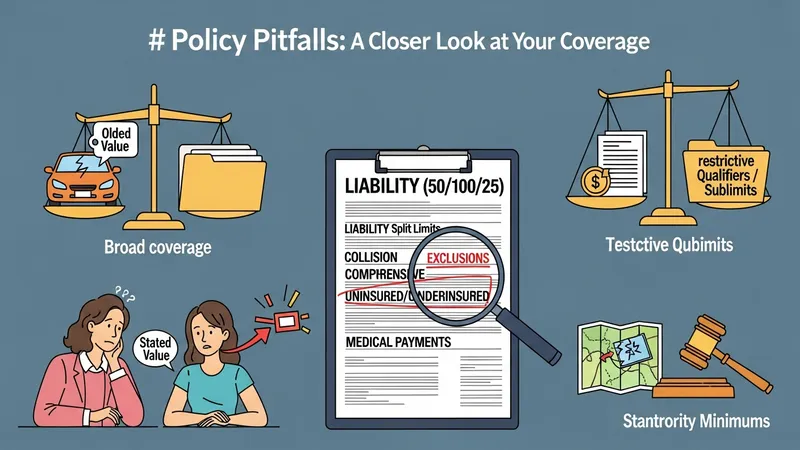
One central area for comparison is the set of policy types and the coverage components they include. Common components to examine are liability coverages (often expressed as split limits), collision, comprehensive, uninsured/underinsured motorist protection, medical payments or personal injury protection, and any jurisdiction-specific mandatory elements. When comparing policies, look at how each component is defined and whether limits are per person, per accident, or aggregate. Variations in definitions, sublimits, or statutory minimums can affect the level of protection offered in different scenarios.
Coverage exclusions and conditional language are aspects that frequently differentiate policies with similar named coverages. For instance, a comprehensive coverage may exclude certain perils or have particular provisions for theft or vandalism that differ by insurer. Collision coverage may include limitations regarding custom parts or stated-value options for older vehicles. Comparing the exact contract language relating to exclusions, conditions, and definitions can reveal whether a coverage operates broadly or with restrictive qualifiers that could reduce protection in specific events.
Endorsements and riders can expand or narrow the core coverage and are central to apples-to-apples comparisons. Common endorsements include rental reimbursement, roadside assistance, gap coverage, and new-vehicle replacement for a limited period. These items often carry separate premiums or may be included in certain policy packages. When evaluating optional add-ons, it can be useful to note whether similar endorsements are available across the policies being compared and how their scope or waiting periods differ.
Policy periods, renewal terms, and cancellation provisions also affect comparative analysis. Some policies renew automatically with the same terms, while others may be subject to mid-term adjustments due to underwriting changes. Cancellation and nonrenewal clauses, and any stated notice periods or premium adjustment practices, can influence the long-term stability of coverage. Considering these administrative terms alongside the core coverages provides a more complete view of how a policy will perform over time.

Deductible and limit structures are central numeric elements in policy comparisons. A higher deductible often corresponds with a lower premium estimate, while higher limits generally increase premium exposure. When comparing policies, pay attention to whether deductibles apply per incident or per vehicle, whether there are separate deductibles for collision and comprehensive, and whether any deductible offsets apply for certain claim types. Limits should be compared in both name and how they are applied — per-person versus per-accident split limits versus single-limit policies, for example.
Liability protections can be structured with different limit combinations and optional features such as supplementary payments. Policies may provide varying coverages for legal defense costs, bail bonds, or loss of earnings while attending trials; these items often appear under "supplementary payments" and can be compared as part of liability features. Additionally, consider whether a policy includes sublimits for specific property types or medical payments, as these can constrain payouts even when an overall liability limit seems adequate.
Understanding how uninsured and underinsured motorist coverages operate is important for comparisons. These coverages may be required in some jurisdictions and optional in others, and they can be defined on a per-person or per-incident basis. The interplay between an insurer’s limits and the typical exposure in an area — such as the frequency of third-party underinsurance — may influence the practical value of higher UM/UIM limits. Comparing the extent of coverage and any stacking rules can clarify how much protection will be available post-accident.
Some policies incorporate alternative dispute resolution clauses or specify legal forums and arbitration procedures for claims disputes. These procedural elements can affect the post-loss experience and potential recoveries. When comparing policies, note whether dispute resolution is handled through arbitration, mediation, or traditional court processes, and whether legal cost coverage is explicitly included. While these features may not alter premiums substantially, they influence how claims are resolved and should be considered alongside numeric limits and deductibles.

Optional benefits and endorsements expand coverage scope and often address specific needs not covered by standard policies. Examples include rental reimbursement, emergency roadside assistance, gap coverage that addresses loan or lease shortfalls, and replacement cost for totaled vehicles. The availability, cost, and precise terms of these endorsements can vary significantly, so inclusion in a comparative matrix helps identify differences. It is useful to examine waiting periods, claim documentation requirements, and any mileage or usage limits associated with these options.
Policy terms relating to territory, permitted use, and driver eligibility commonly influence comparative outcomes. For example, some policies restrict coverage to non-commercial personal driving, while others may provide specific endorsements for business use of a personal vehicle. Territory clauses can affect coverage when traveling or temporarily relocating. When comparing policies, document any limitations on named drivers, household members, or permissive users, since these classifications determine who is covered in a loss scenario.
Loss settlement methods and repair standards are additional operational details that often appear in endorsements. Policies may specify actual cash value settlements, stated value agreements, or replacement cost provisions, each of which affects post-loss financial outcomes. Repair standards — such as use of original equipment manufacturer parts versus aftermarket parts — and whether the insurer offers direct repair networks influence repair quality and timelines. These practical terms should be recorded when comparing optional endorsements across multiple policies.
Finally, consider premium payment plans, grace periods, and surcharge or renewal rating practices as components of selection. Some insurers offer installment payment options with administrative fees, while others may apply different credit or driving history factors at renewal. Understanding these administrative and billing terms helps to align expectations about ongoing costs and policy stability. Summarizing these contractual and operational distinctions alongside core coverage features yields a more comprehensive comparative picture.
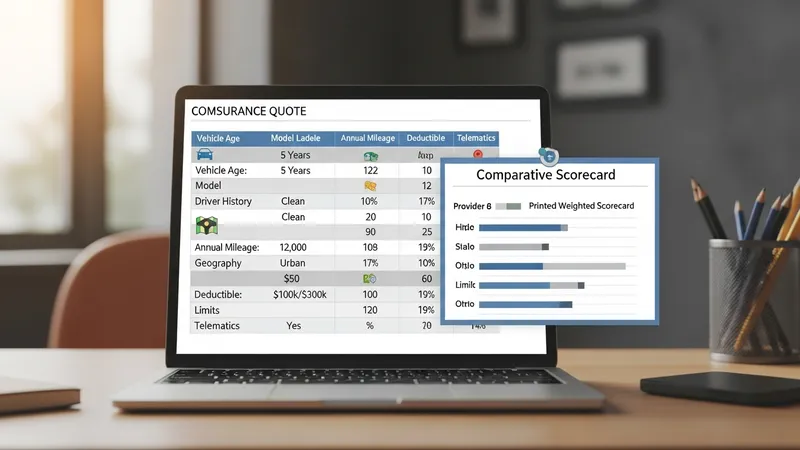
Premiums reflect a combination of underwriting variables and policy choices, so accurate comparison requires isolating those elements. Factors commonly affecting price include vehicle age and model, driver history, annual mileage, geographic risk exposures, chosen deductibles, and selected limits. Insurer-specific rating factors such as credit-based insurance scores, telematics-based discounts, or claims history application may vary and thus change comparative premium estimates. Recording these inputs consistently when soliciting quotes helps to ensure differences in price stem from policy design rather than inconsistent data.
Comparison frameworks may include weighted scorecards, total cost of ownership calculations, or scenario-based assessments that estimate out-of-pocket costs under typical loss events. A scorecard can assign neutral weights to components like coverage breadth, deductible flexibility, endorsements available, administrative terms, and estimated premium. Scenario assessments — for example, estimating costs for a common collision or theft event — can illustrate how different policies respond financially. These methods are analytical tools rather than recommendations and can be tailored to individual priorities.
Practical considerations during comparison include insurer financial strength indicators, complaint indexes published by regulators, and available customer service channels. Publicly reported financial ratings and regulatory complaint summaries may provide context about insurer stability and responsiveness, though they do not guarantee future performance. Access to claims support resources, digital claim filing options, and estimated repair times are operational differences that may influence which features are more relevant to an individual’s circumstances.
When consolidating comparison findings, document assumptions, margin of error in quoted premiums, and any policy conditions that could materially affect coverage. Keeping a written comparison record helps clarify why one policy’s features may be preferable in certain scenarios without asserting a universal recommendation. The following sections (if any) would typically apply these frameworks to sample scenarios to illustrate practical differences, continuing the informational analysis without prescriptive guidance.