
Car insurance research strategies involve systematic steps to understand how coverage options, costs, and policy features interact. This concept refers to methods for gathering and comparing information about liability limits, collision and comprehensive coverage, deductibles, premium drivers, and the practical steps insurers take during claims assessment. The goal of the research approach is to clarify which elements of a policy influence cost and protection levels so that an individual can form an informed view of coverage trade-offs without relying on promotional material or sales language.
Research strategies typically combine primary sources, such as policy documents and insurer rate filings, with secondary sources like consumer guides and regulatory publications. These methods may include structured comparison of declarations pages, review of exclusions and endorsements, analysis of how vehicle use and driving history can affect premiums, and assessment of claims handling practices. The focus remains descriptive: identifying what information exists, how it is presented, and which policy features commonly affect cost and outcomes.
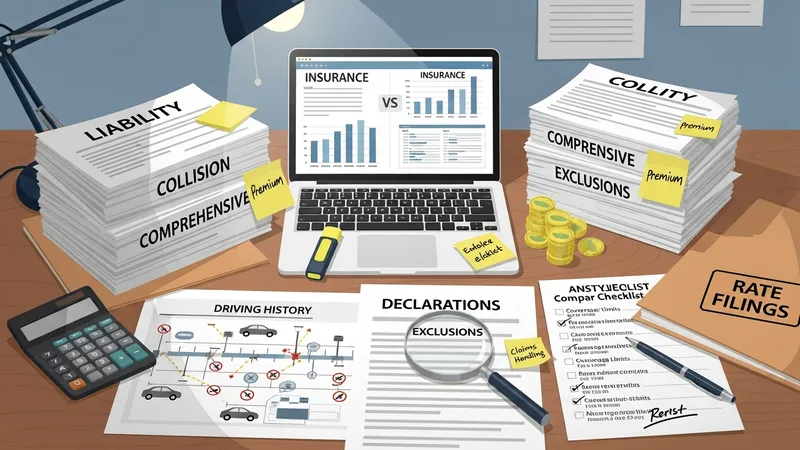
When comparing coverage types, it may help to categorize policy elements into liability protection, first-party coverage (collision and comprehensive), and ancillary features such as rental reimbursement or roadside assistance. Liability protection typically specifies bodily injury and property damage limits that may range numerically depending on jurisdictional minimums and personal preference. First-party coverages often include deductible choices that trade lower premiums for higher out-of-pocket cost at claim time. Assessing these categories side-by-side can reveal common trade-offs without asserting any single configuration as universally preferable.
Premium cost drivers often include vehicle value, use patterns, driving record, and location-related risk factors. For many drivers, age of the vehicle and security features may influence comprehensive and collision rates, while annual mileage and primary use (commuting versus recreational) may be reflected in underwriting questions. Insurers typically use historical loss data and actuarial models to set rates, so observed price ranges may vary widely across markets and over time; research should therefore consider multiple recent quotes or rate filings when forming conclusions.
Deductible selection and liability limit choices can meaningfully affect premium estimates and potential out-of-pocket exposure. A higher deductible commonly reduces a premium estimate but increases the cost at the time of a claim; liability limits determine the insurer’s contractual responsibility for third-party losses. Careful review of how deductibles apply—for example, whether they are per-claim or per-incident—and whether limits are per-person or per-incident can change a practical understanding of coverage levels during research.
Understanding the claims process is an important research component because policy wording, claim reporting windows, and insurer repair or settlement practices may influence real-world outcomes. Public complaint records and regulatory summaries may give insight into processing timelines and common dispute areas. Research that includes sample claim scenarios and how different policies would respond to those scenarios can provide practical context without prescriptive recommendations.
In summary, researching car insurance costs and coverage needs means combining primary policy review, comparison tools, and regulator or consumer resources to build a rounded understanding of how premiums, deductibles, liability limits, and policy features interact. The approach emphasizes careful reading of policy language, cross-checking simplified summaries, and noting common cost drivers. The next sections examine practical components and considerations in more detail.
Exploring the main coverage categories may clarify what to expect in policy language. Liability coverage typically addresses third-party bodily injury and property damage and may be expressed as separate limits or combined limits. First-party coverages, commonly named collision and comprehensive, relate to damage to the insured vehicle; collision often covers impact-related losses while comprehensive often covers non-collision perils such as theft or weather events. Additional coverages—such as uninsured/underinsured motorist protection, medical payments, or specified perils—may be optional or required depending on local rules. Research should note which coverages are bundled and which are optional, and whether any endorsements modify standard terms.

When reviewing declarations pages and policy forms, research may focus on the exact phrasing of exclusions and limitations. Exclusions can narrow coverage in ways that are not obvious from a summary, for example by defining excluded drivers, prohibited uses, or maintenance-related clauses. Endorsements and riders can alter coverage scope; therefore, identifying common endorsements used by insurers in a market can illuminate typical policy variations. Comparative tables that list coverages and common endorsements can help organize findings without implying preference.
Coverage limits and how they apply in multi-vehicle or multi-driver households are important considerations in research. Limits may be presented per-person, per-accident, or in aggregate, and they may interact with other coverages such as umbrella policies or commercial auto provisions if applicable. For households with multiple drivers or mixed vehicle types, examining how an insurer assigns risk and applies discounts or surcharges can be informative. Research that notes how limits stack or do not stack across policies can reduce ambiguity when estimating protection levels.
Examples from public guidance and insurer sample policies may help illustrate common formulations of coverage language. Consumer-oriented guides often include template declarations pages and annotated policy excerpts that highlight where to look for deductibles, limits, and exclusions. These materials may show typical ranges for deductibles and illustrate standard clauses, which can be used as reference points when examining actual offers or historical rate filings in a given market.
Premium estimates may reflect many interacting factors, and research often needs to separate underwriting variables from optional choices. Vehicle-related factors such as model, year, safety features, and repair costs can influence rates; similarly, personal factors like driving history, age, credit-based insurance scores (where permitted), and reported mileage can affect premiums. Geographic considerations—such as theft rates, weather exposure, and local repair costs—also commonly play a role. When aggregating information, distinguishing between controllable choices (deductible level, coverage set) and external underwriting criteria can clarify which levers typically move premiums.
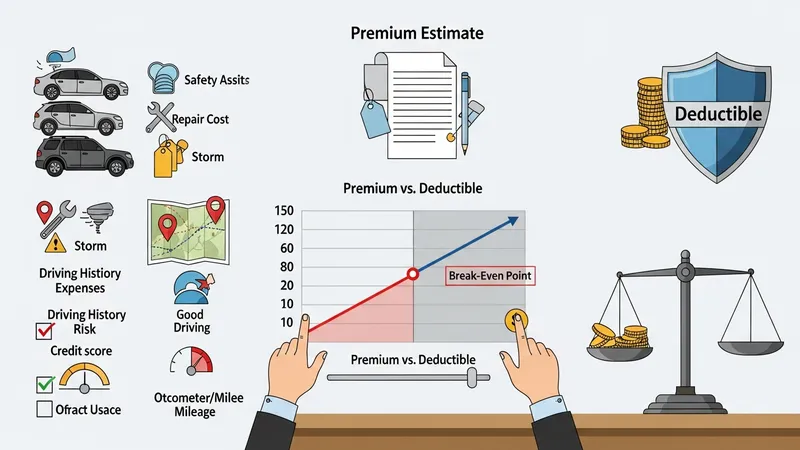
Deductible selection research should consider scenarios that compare premium savings to potential out-of-pocket exposure. Typical deductibles may range from lower levels that reduce immediate risk to higher levels that lower premium cost; the balance often depends on an individual's financial tolerance for claim-related expenses. Some research frameworks suggest calculating break-even points where premium savings over time offset higher deductibles, but such calculations typically rely on historical claim frequency and are therefore indicative rather than definitive.
Discounts and risk mitigation features can appear in many forms but are applied differently by various insurers. Common reductions may relate to multi-policy discounts, multi-vehicle discounts, driver training, anti-theft equipment, or safe driving records. Usage-based insurance programs that monitor driving behavior may offer pricing that aligns more closely with actual driving patterns; however, participation in such programs may have privacy or data-sharing considerations that merit attention when researching options.
Actuarial and public rate data can provide context about typical price ranges in a market, but research should treat these figures as illustrative. Insurer rate filings and regulatory summaries sometimes report average premiums or loss ratios that may be useful for benchmarking. Aggregating several recent quotes or consulting multiple independent sources may reveal typical premium bands and help identify outliers in pricing presentations without implying a single correct choice for every situation.
Investigating policy features often requires attention to precise contractual language that governs how losses are handled. Research may examine whether policies include limits on replacement cost versus actual cash value, how depreciation is applied, and whether there are separate deductibles for specific perils. Liability limits determine the insurer’s exposure to third-party claims and may be structured differently across markets; research should note whether limits are stated per-person, per-incident, or split between bodily injury and property damage, and how those structures align with potential exposure scenarios.
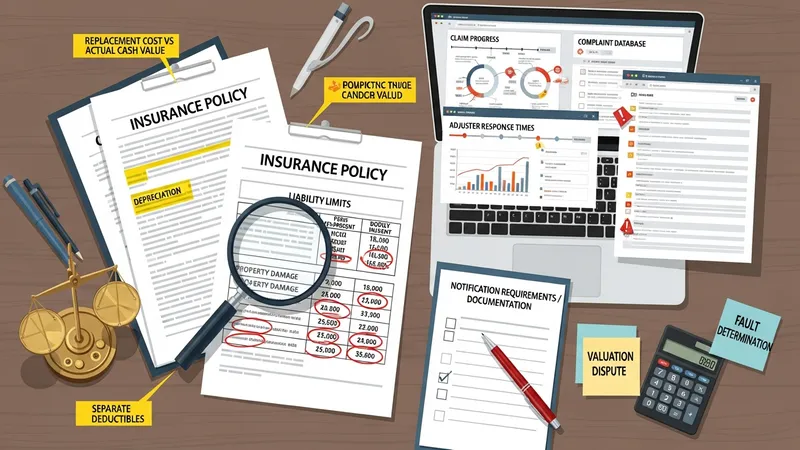
The claims process is another area where research can yield practical insights. Typical topics include notification requirements, documentation needed to support a claim, timelines for adjuster response, and whether the insurer offers direct repair networks or cash settlements. Public complaint databases and independent reviews can sometimes reveal recurring issues in claims handling, such as disputes over fault determination or valuation methods. Observing common dispute themes may help identify policy language worth closer scrutiny in the documents reviewed.
Research may also include analysis of settlement practices and valuation methods for vehicle damage or total loss. Policies that specify replacement cost coverage or include provisions for diminished value may handle settlements differently than those that default to actual cash value. Understanding whether a policy provides agreed value for certain vehicle types or includes carve-outs for aftermarket parts can be relevant when estimating possible claim outcomes and costs over time.
When researching liability exposure, illustrative scenarios can show how limits and exclusions may play out in practice. For example, a high-severity bodily injury event may quickly exceed low liability limits, while certain property damage exclusions could shift expenses back to the insured. Including scenario-based comparisons in research can clarify how different policy structures interact with potential real-world events without asserting which approach is universally correct.
Effective research often combines multiple source types: primary policy texts, regulator materials, independent comparison tools, and historical rate or complaint data. Synthesizing these sources may involve cross-checking simplified policy summaries against the actual contract language and noting where summaries omit limits, exclusions, or endorsements. Periodic review is also relevant because rates, underwriting criteria, and market offerings may change over time; research that incorporates recent filings or updated regulatory guidance can reduce reliance on outdated assumptions.
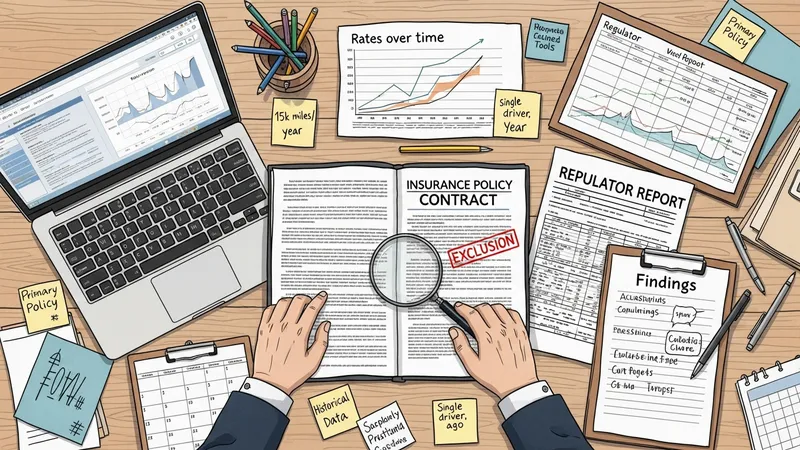
When assembling findings, clarity about assumptions used by each source is useful. For example, comparison tools may assume a specific mileage or driver profile that differs from an individual's circumstances; regulators’ average premium figures may be influenced by demographic distributions not representative of a single user. Explicitly documenting such assumptions can help interpret why estimates diverge and which pieces of information require more precise, individualized verification.
Insider considerations that may be useful as neutral research points include checking the effective dates on policy forms, understanding whether quoted coverage includes temporary or limited endorsements, and noting how premium estimates handle surcharges or fees. For ongoing monitoring, research strategies may include maintaining a record of historical quotes and policy changes to observe trends rather than relying on a single snapshot.
Finally, research frameworks that combine qualitative and quantitative elements may yield more complete insights. Quantitative elements include typical premium ranges, deductible break-even calculations, and limits comparisons; qualitative elements involve policy language nuance, claims handling descriptions, and consumer experience summaries. Keeping both dimensions in view may help produce balanced, informational findings that assist understanding without prescribing a single course of action.