
Accredited online accounting colleges refer to postsecondary programs delivered remotely by institutions that hold formal recognition from recognized quality-assurance bodies. These programs typically combine core accounting instruction, business fundamentals, and elective specializations delivered through virtual classrooms, recorded lectures, and digital assessments. Students may follow structured degree tracks—associate, bachelor’s, master’s, or certificate levels—designed to build competencies in areas such as financial reporting, taxation, auditing, and accounting information systems while meeting institutional quality standards.
Such programs often align course content with professional credential requirements and workplace competencies so that learners can prepare for credentialing exams or specific industry roles. Accreditation may influence credit transfer, employer recognition, and eligibility for certain professional examinations in some jurisdictions. Online delivery formats commonly incorporate asynchronous and synchronous elements, virtual labs, case studies, and assessments intended to demonstrate applied accounting skills rather than solely theoretical knowledge.
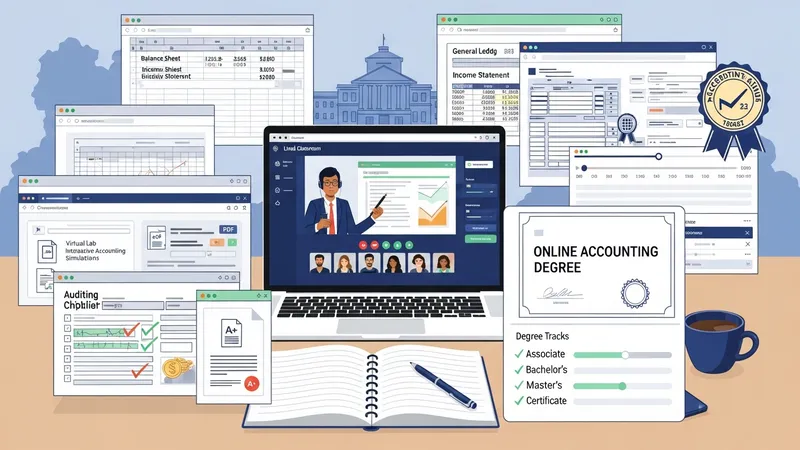
When comparing program types, learners often consider how curricula map to recognized competency frameworks for accounting practice. Degree programs may include a blend of conceptual courses and applied assignments that reflect frameworks used by professional bodies. For example, programs can incorporate ethics, communication, and quantitative reasoning in addition to technical accounting topics. Transfer pathways and credit articulation may be important for those progressing from an associate to a bachelor’s level; accreditation status commonly affects how credits are accepted by receiving institutions.
Program delivery models vary and can influence learning outcomes. Synchronous components such as live seminars may support interactive case discussions, while asynchronous modules allow flexible pacing. Many programs integrate software training—spreadsheets, enterprise resource planning demonstrations, and basic data analytics—so learners practice tasks that resemble workplace activities. Assessment strategies can range from timed examinations to project-based assessments that require application of accounting principles to simulated financial statements or audit scenarios.
Alignment with professional certification requirements often shapes course sequencing and credit hours. Some online programs explicitly map their curricula to the knowledge domains of credentialing exams so that graduates cover relevant subject matter. However, professional certification bodies may have separate eligibility requirements—such as specific credit totals, ethics modules, or supervised experience—that are managed outside of academic accreditation. Prospective students typically review both academic curricula and professional qualification rules to understand combined pathways.
Outcomes associated with these programs can include a range of career roles and further credentialing paths. Graduates may enter audit, tax, financial reporting, management accounting, or advisory roles depending on program depth and elective focus. Specializations such as forensic accounting or nonprofit accounting might emphasize sector-specific regulations and reporting standards. Employment prospects and credentialing timelines can vary by jurisdiction and employer expectations, so program selection often considers how well curricular content matches intended career roles.
In summary, accredited online accounting programs combine institutional quality assurance with curriculum design that may support examination preparation and role readiness. Program types span associate to graduate levels and include certificates for targeted skill development. The next sections examine practical components and considerations in more detail.
Accreditation refers to an independent evaluation of an institution’s academic quality and administrative practices. For accounting-focused programs, accreditors assess curriculum relevance, faculty qualifications, learning outcomes, and student support systems. Programmatic accreditation for business schools or accounting departments may exist alongside institutional accreditation; commonly referenced bodies assess accounting and business education standards to varying extents. Accreditation status can influence credit transfer, eligibility for certain government financial aid programs in some regions, and employer recognition, though recognition practices can differ by country and employer.
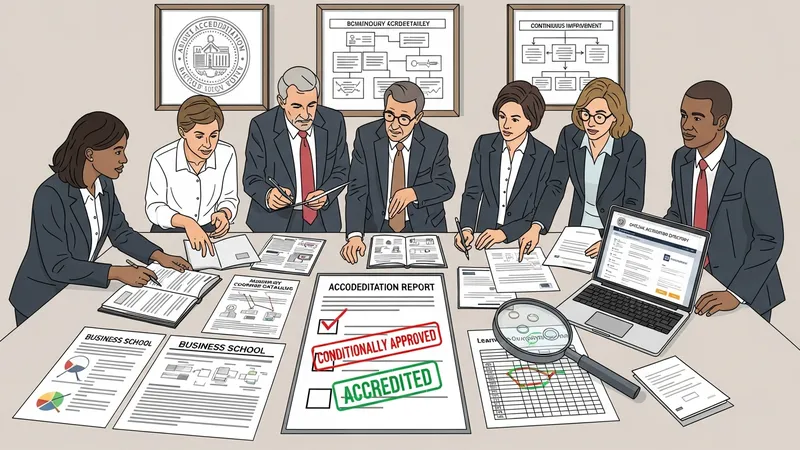
Prospective learners may examine accreditation reports, course catalogs, and learning outcomes to assess alignment with professional expectations. Accreditation reviews often require evidence of continuous improvement, assessment of student learning, and appropriate faculty expertise. In practice, programs that hold recognized accreditation may report higher transparency in course objectives and assessment methods. Verification steps can include consulting official accreditor directories or institutional disclosures to confirm current standing and any relevant conditions or time-limited approvals.
Accreditation may also affect professional credential pathways where certifying bodies reference academic requirements. Some credentialing authorities require degrees from accredited institutions or specified coursework in subjects like auditing and taxation. While accreditation itself does not guarantee eligibility for professional examinations, it often provides a clearer mapping between academic content and competency domains assessed by professional exams. Students commonly review both accreditation status and certification body rules when planning a qualification pathway.
For institutions offering fully online delivery, accreditors typically evaluate whether the remote learning environment provides equivalent academic rigor and student support compared with on-campus programs. Elements under review can include learning technology, assessment integrity, academic advising, library access, and measurable learning outcomes. These considerations aim to ensure that online formats maintain comparable standards for instruction and assessment while accommodating the distinct logistics of remote education.
Curricula in accredited online accounting programs often combine foundational business courses with discipline-specific accounting topics. Core subjects typically include financial accounting, managerial accounting, auditing, taxation, and accounting information systems. Programs may sequence courses to build from introductory concepts to advanced applications, and many include a capstone project or practicum that requires integrated analysis of financial statements, audit procedures, or tax planning scenarios. Electives allow depth in areas such as forensic accounting, nonprofit accounting, or international financial reporting.

Competency development frequently emphasizes both technical knowledge and transferable skills. Technical competencies involve interpretation of financial statements, application of accounting standards, and preparation of tax computations. Transferable skills commonly embedded in coursework include written and oral communication, ethical reasoning, problem solving, and quantitative analysis. Educators often design assessments to evaluate applied proficiency, for example through case studies, simulations, and group projects that reflect workplace tasks and professional documentation standards.
Instructional methods used in online programs may include recorded lectures, interactive modules, virtual labs for software practice, and discussion forums for collaborative learning. Accounting software tutorials and spreadsheet-based assignments are common tools to build practical skills. Some programs incorporate external simulations or partnerships that let learners practice audit sampling, ledger reconciliation, or tax filing in controlled environments. These experiential elements may support readiness for entry-level professional roles or for tasks encountered during credentialing internships and supervised practice.
Course sequencing and elective choices can influence readiness for certification exams and sector-specific roles. For example, a program that emphasizes taxation and tax research may better prepare learners for roles in tax compliance or advisory services, while one with stronger audit and assurance components may align with public accounting pathways. Students often assess curriculum content, required credit hours, and learning outcomes to determine how closely a program’s structure matches their intended competency profile and career orientation.
Many accredited online accounting programs aim to prepare learners for professional certification examinations by aligning course topics with exam subject areas. Academic curricula can cover technical domains assessed by credentialing bodies—such as financial reporting, auditing, taxation, and ethics—thereby providing foundational knowledge that supports exam study. However, certification eligibility commonly requires meeting specific credit or residency requirements and may include supervised professional experience, continuing education, or ethics modules that operate separately from academic accreditation.
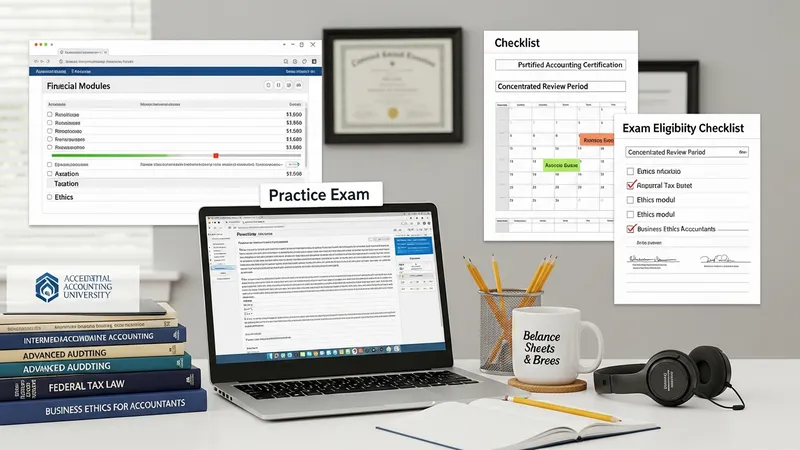
Programs sometimes offer explicit exam-preparation resources such as review modules, practice question banks, or partnerships with review course providers; these resources may supplement formal coursework and help learners familiarise themselves with exam formats. Timelines for preparation can vary: some candidates prepare while completing degree requirements over several semesters, whereas others pursue concentrated review periods after graduation. Academic scheduling flexibility can support diverse preparation strategies but does not replace the formal registration and eligibility processes mandated by certifying bodies.
Institutions may also provide advising regarding professional pathways, clarifying how academic credits map to exam prerequisites and what supplemental requirements may exist. For example, learners often need to track specific accounting or business credit counts and ensure any required ethics coursework is completed. Employers and professional bodies may expect candidates to document both academic achievements and supervised practice experience; academic programs that facilitate practicum placements or internships can assist with these documentation needs.
Given variation among credentialing organizations and jurisdictions, students typically verify exam eligibility directly with the relevant professional authority in their jurisdiction while assessing program curricula. This dual review—academic course coverage alongside certifier requirements—helps learners design a combined academic and professional timeline that addresses examination content, credit thresholds, and experiential prerequisites without assuming uniform regulations across regions.
Graduates of accredited online accounting programs commonly pursue a range of professional roles that draw on accounting and financial skills. Typical positions include staff accountant, audit associate, tax analyst, management accountant, and financial reporting specialist; specialization areas such as forensic accounting, government accounting, and internal audit may lead to sector-specific responsibilities. Employers in public accounting, corporate finance, nonprofit organizations, and governmental entities often seek candidates with both technical accounting knowledge and demonstrated communication and analytical abilities.
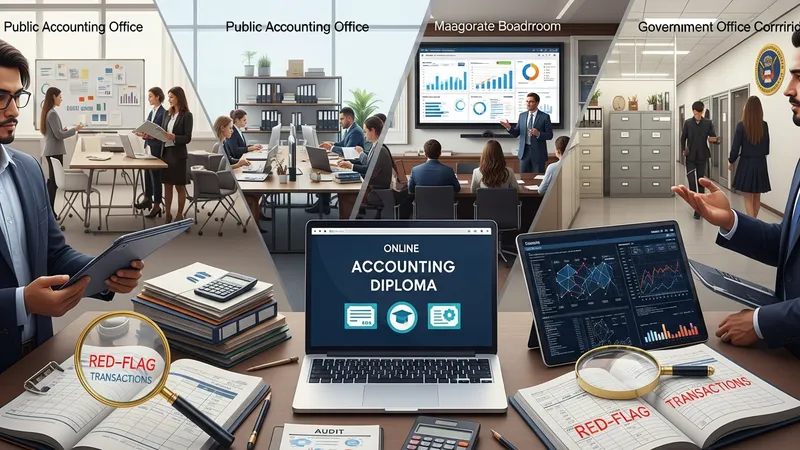
Specialized elective sequences or certificate options can shape career trajectories by emphasizing particular regulatory frameworks, analytical techniques, or industry practices. For instance, a focus on forensic accounting may include coursework in fraud examination and forensic data analysis, while a track in nonprofit accounting might emphasize fund accounting and grant reporting. Such specialization typically supplements core accounting competencies and can influence the types of roles graduates pursue and the environments in which they work.
Continued professional development remains a common component of accounting careers. Credential holders often engage in continuing professional education to maintain certification status and stay current with evolving standards and regulations. Employers may value candidates who demonstrate ongoing skill development in areas such as data analytics, regulatory updates, and emerging accounting software. Academic programs that integrate lifelong learning perspectives can support graduates in planning post-qualification study or short-form certificate courses.
When evaluating career pathways, learners often consider factors such as typical entry-level responsibilities, expected competencies for advancement, and the relevance of elective coursework to target sectors. Outcomes vary by individual background, jurisdictional credentialing rules, and employer practices; therefore, aligning program content with intended professional roles and anticipated credential timelines can help shape a coherent development plan without presuming uniform results.