
Undergraduate business programs delivered online are designed to provide foundational and applied instruction in areas such as accounting, management, marketing, finance, operations, and organizational behavior. These programs usually structure learning into discrete courses that map to credit requirements for a bachelor's degree, combining theoretical study with practical assignments. Delivery methods may include recorded lectures, live discussions, reading modules, case analyses, and project-based work. The online format aims to replicate core academic elements found in campus programs while using digital tools for interaction, assessment, and resource distribution.
Program structure commonly includes general education requirements, a business core, and elective or concentration options that allow focused study in specific business domains. Typical program planning addresses sequencing of prerequisite courses, capstone integration, and assessment timing across terms or semesters. Faculty oversight, academic advising, and student support services are often provided through the same online systems used for instruction. Accreditation, transfer-credit policies, and residency requirements for certain experiential components are important structural aspects that may vary by institution.

Asynchronous and synchronous formats may be combined within a program to balance flexibility and direct engagement. Asynchronous content (recorded lectures, readings, quizzes) often supports learners with varied schedules, while synchronous meetings can facilitate immediate feedback and collaborative discussion. Program pacing may vary: some institutions offer standard semesters, others use compressed modules that last several weeks. When comparing formats, learners may consider how interaction frequency, feedback turnaround, and peer collaboration align with learning preferences and time availability.
Curriculum frameworks typically cover quantitative foundations (statistics, spreadsheet modeling), core business disciplines (accounting, finance, marketing, management), and integrative courses (strategy, ethics). Elective choices or concentration tracks may allow deeper study in areas such as supply chain, entrepreneurship, or human resources. Many programs also incorporate communications and critical thinking components to support interdisciplinary competence. Credit requirements often reflect standards for undergraduate degrees, with the final year commonly focused on synthesis through a capstone or research project.
Assessment methods in online undergraduate business study commonly include timed quizzes, written assignments, case study analyses, group projects, and proctored exams where academic integrity needs to be maintained. Group work may use collaborative document tools and discussion boards to coordinate deliverables across locations. Institutions may require identity verification for certain assessments or use remote proctoring technologies when appropriate. Evaluation rubrics typically define expectations for analysis, application of theory, and clarity of communication to provide consistent grading across modalities.
Courses that emphasize leadership, managerial decision-making, and applied technology usually integrate practical tools such as spreadsheet modeling, customer-relationship-management simulations, and basic data visualization. Learning outcomes often center on the ability to interpret financial information, develop strategic recommendations, and lead team-based projects. Programs may describe these outcomes in competency terms rather than guaranteed employment effects. When reviewing curricular focus areas, it can be helpful to map course learning objectives to intended competencies to see how the program supports applied skill development.
In summary, online undergraduate business programs are organized around a sequence of general education, core business courses, and elective specializations, delivered through a mix of digital formats and assessment types. Structural considerations such as credit load, term length, assessment modality, and capstone requirements may differ by provider and can influence planning for degree completion. The next sections examine practical components and considerations in more detail.
Delivery formats for online undergraduate business study commonly include fully asynchronous, fully synchronous, and hybrid models that mix the two. Asynchronous courses provide recorded lectures, readings, and exercises that learners access on their own schedule, which may suit those balancing other responsibilities. Synchronous models schedule live class sessions for real-time discussion and clarification, which can support intensive cohort interaction. Hybrid formats typically combine asynchronous content with periodic live sessions or synchronous office hours. Program schedules may operate on traditional semester calendars or accelerated modules that condense course content into shorter time frames.
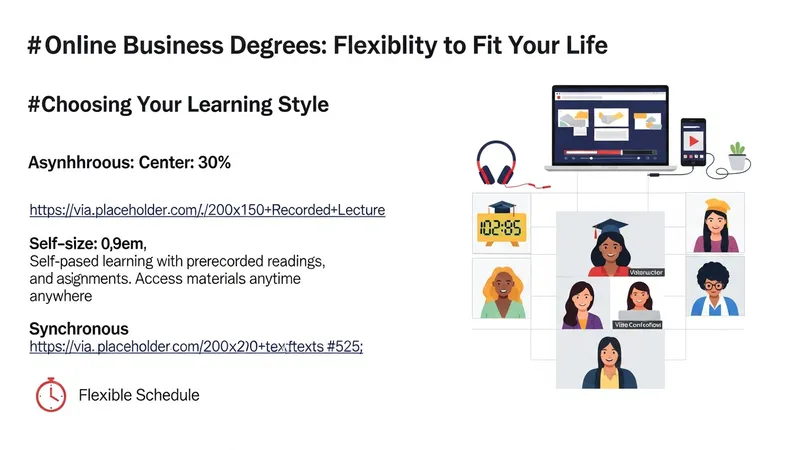
When evaluating scheduling structures, consider course sequencing and prerequisite chains that may affect the pace of study. Full-time enrollment often corresponds to a standard course load across terms, while part-time or accelerated formats adjust the number of concurrent courses. Institutions may offer rolling admissions or set intake periods; module-based programs sometimes permit more frequent start dates. Workload estimates provided by institutions typically indicate weekly hours for reading, assignments, and collaborative work, which can help align the program timetable with personal constraints.
Interaction design varies across delivery models and may influence learning outcomes. Instructors may use discussion boards, peer review tools, and short formative quizzes for ongoing engagement in asynchronous settings. Live sessions may incorporate breakout discussions, case debriefs, and guest speaker segments to simulate classroom dialogue. Group projects require coordination mechanisms such as shared documents, project management tools, and clear milestone schedules. Consideration of how a program supports synchronous participation, recorded access, and teamwork coordination is often relevant to sustained progression through the curriculum.
Programs often specify expectations for participation, deadlines, and time-sensitive assessments; these policies can affect scheduling flexibility. Policies on late submissions, extension provisions, and assessment windows vary and may be particularly relevant for learners managing external commitments. Academic advising and student support services that are accessible online can assist with planning term loads and managing sequencing of courses. Readers may find it useful to compare sample term plans or course maps provided by institutions to assess how delivery formats align with typical degree timelines.
Core curriculum components in undergraduate business study usually include introductory courses in accounting, principles of microeconomics and macroeconomics, statistics, finance, marketing, and management. These foundational courses aim to build analytical reasoning, quantitative literacy, and domain-specific knowledge. Programs often require business law, ethics, and organizational behavior to contextualize managerial decision-making. Many curricula integrate communications courses that emphasize written and oral business communication, given their relevance for professional settings and cross-functional collaboration.

Quantitative and analytical skills are commonly reinforced through courses that apply spreadsheet modeling, basic financial analysis, and statistical methods to business problems. Data interpretation and the ability to communicate findings visually may be included as part of course learning outcomes. Case-based learning often connects theoretical frameworks to industry scenarios, fostering application of tools in decision contexts. The balance between theory and practice may vary by institution, with some programs emphasizing applied projects and others focusing on conceptual foundations.
Ethics, corporate responsibility, and legal contexts are frequently woven into the core to promote awareness of regulatory and societal considerations in business action. Strategic thinking courses typically synthesize knowledge from multiple domains, asking students to evaluate competitive positions, resource allocation, and long-term planning. Communication competencies are often assessed through business reports, presentations, and collaborative deliverables that require clear argumentation and evidence-based recommendations.
Programs may also include introductory information-systems or business-technology courses that introduce enterprise systems, basic database concepts, and software commonly used in business analysis. These practical technology components can serve as a bridge to specialization tracks and applied capstones. When reviewing curricular outlines, mapping the listed courses to desired competencies—such as analytical reasoning, financial literacy, or leadership—can clarify how the program emphasizes business fundamentals.
Elective tracks and specializations allow students to focus studies on particular business domains, such as entrepreneurship, supply chain management, human resources, digital marketing, or financial analysis. These tracks typically consist of a set of upper-division electives that build domain depth beyond the core. Specialization sequences often include applied courses, simulations, or industry case studies that require synthesis of technical and managerial concepts. Choice of electives may shape the types of projects and skills emphasized in the capstone experience.

Capstone projects or integrative courses commonly require teams or individuals to apply accumulated knowledge to a comprehensive business problem. Capstones may involve strategic analyses, business-plan development, market research, or consulting-style deliverables. Some programs partner with external organizations for applied projects, while others use simulated environments or faculty-guided cases. The capstone tends to emphasize cross-functional integration, requiring students to combine financial, operational, marketing, and leadership perspectives in coherent recommendations.
Practicum experiences, internships, or experiential modules can sometimes be completed virtually or locally, depending on program design and institutional partnerships. These experiences aim to provide applied exposure to professional contexts and may include reflective components and supervisor evaluations. When practicum options are presented, program materials usually specify requirements, expected hours, and assessment criteria. For students considering specialization tracks, reviewing how practicum elements align with elective content can indicate coherence in applied learning opportunities.
Selection of electives and capstone topics often involves academic advising to ensure prerequisites and learning outcomes align. Institutions may publish sample pathways that show how specializations unfold across terms, including recommended sequencing. Considerations such as availability of faculty expertise, access to project partners, and technology resources for simulations may affect the depth and practicality of specialization offerings. These factors can inform expectations about the skills and integrative experiences a program typically supports.
Assessment in online undergraduate business programs commonly combines formative and summative methods: quizzes, written assignments, project deliverables, presentations, and proctored or monitored exams. Rubrics often clarify performance standards for analytical reasoning, application of theory, and communication quality. Remote proctoring and identity verification technologies are sometimes used for high-stakes assessments to uphold academic integrity. Group assessments may include peer-evaluation components to capture contributions within team-based work.
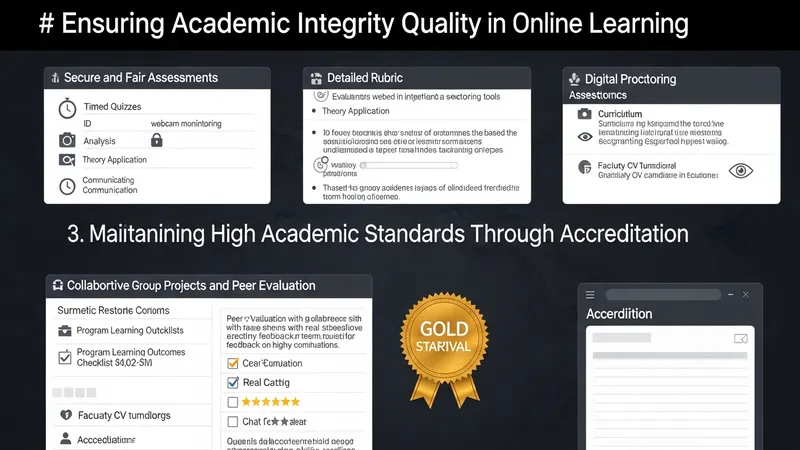
Accreditation and quality assurance are relevant structural considerations; many institutions hold regional accreditation and some business units pursue specialized accreditation that may indicate adherence to certain curricular standards. Accreditation typically involves review of curriculum, faculty qualifications, assessment practices, and student support services. Prospective learners may review accreditation statements and program learning outcomes to gauge alignment with recognized academic standards rather than relying on promotional claims.
Educational technology choices—LMS platforms, videoconferencing systems, collaboration suites, and virtual simulation tools—shape daily learning experiences. Integration of analytics within LMS platforms can provide instructors with data on student engagement patterns, which may inform feedback strategies. Accessibility features, mobile access, and technical support availability are practical considerations that can affect learner participation. Institutions commonly publish technical requirements and support resources to help students assess readiness for online study.
Institutional supports such as advising, library access, tutoring, and career services are often adapted for online learners and may include virtual appointments, digital resources, and asynchronous workshops. These services may influence persistence and completion patterns by providing academic and professional guidance. When evaluating programs, reviewing the scope and accessibility of student support resources can inform expectations about how the institution facilitates academic progress and applied skill development.